When Should You Start Physical Therapy for Knee Pain?
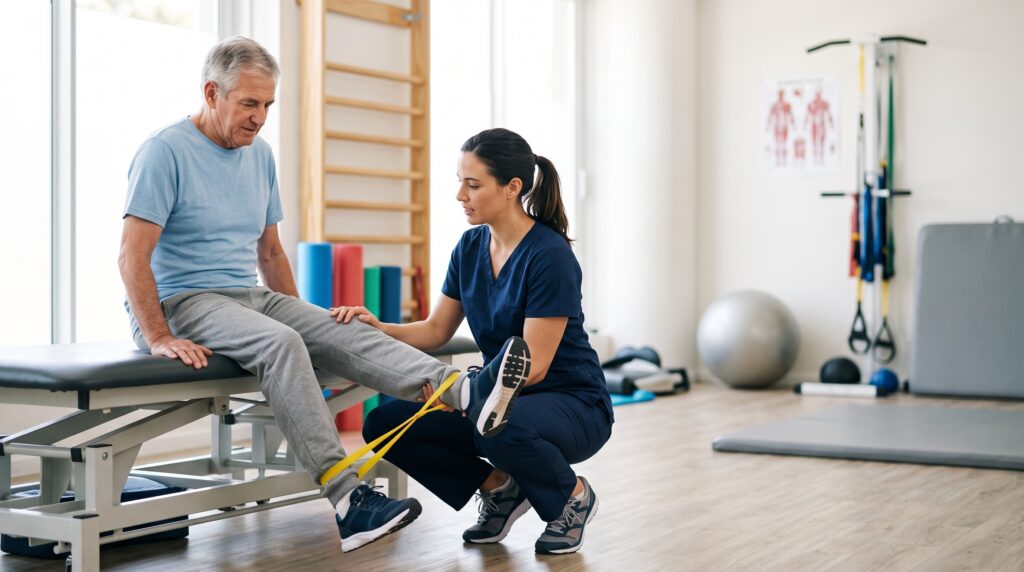
You may want to start physical therapy for knee pain when discomfort affects stairs, walking, standing, work, workouts, sports, or daily movement. A physical therapist can evaluate strength, mobility, balance, and movement patterns to help identify what may be contributing to knee pain and guide your next steps.
Knee pain has a way of changing how you move before you realize how much it is affecting your routine.
At first, it may only show up on stairs. Then maybe you notice it during workouts, after a long day on your feet, when you squat, kneel, walk the dog, or get in and out of the car. For some people, knee pain appears after an injury. For others, it builds slowly over time until daily movement starts to feel less natural.
So, when should you start physical therapy for knee pain?
The answer is not always based on how severe the pain feels. It is often based on how the knee is affecting your movement, confidence, activity level, and ability to do the things you need or want to do.
Knee Pain Does Not Have to Be Severe to Be Worth Addressing
Many people wait to ask about knee pain because they assume it needs to be sharp, constant, or seriously limiting before it deserves attention. But knee discomfort does not have to be extreme to interfere with daily life.
You may notice knee pain when:
- Going up or down stairs
- Standing for long periods
- Walking at work or around the house
- Squatting, kneeling, or lifting
- Running, training, or playing sports
- Getting in and out of a chair or car
- Returning to activity after surgery or injury
- Changing how you move to avoid discomfort
These changes can matter because the knee does not work alone. The hip, ankle, foot, core, balance, strength, mobility, and activity demands can all influence how the knee feels during movement.
A physical therapy evaluation can help identify what may be contributing to the issue and what steps may help.
Signs It May Be Time to Schedule a Physical Therapy Evaluation
You do not need to know exactly what is causing your knee pain before scheduling an evaluation. In fact, that is one of the reasons physical therapy can be a helpful first step.
It may be time to ask about knee pain if:
- Pain has lasted more than a few days or keeps returning
- Stairs are becoming uncomfortable or difficult
- You feel stiffness, weakness, or instability
- You are avoiding certain movements
- You are limping or favoring one side
- Your knee feels different during work, exercise, or sports
- You are unsure whether you should rest or keep moving
- You are recovering from a knee injury or surgery
- Knee discomfort is limiting your confidence with activity
The goal of an evaluation is not just to look at where it hurts. It is to understand how your knee and the rest of your body are working together.
Why Waiting Can Sometimes Make Movement Harder
Sometimes knee pain improves with time and rest. Other times, waiting can lead to new movement habits.
For example, you may start shifting weight away from one leg, avoiding stairs, shortening your stride, reducing workouts, or relying more on the opposite side of your body. These adjustments may feel helpful in the short term, but they can also change how you move.
Physical therapy can help evaluate whether strength, mobility, balance, or movement patterns are contributing to the discomfort. From there, your therapist can help build a plan that supports your goals, whether that means getting through work more comfortably, returning to workouts, preparing for sport, or improving everyday movement.
How Physical Therapy Can Help With Knee Pain
Physical therapy for knee pain starts with understanding the full picture.
At Precision Performance Physical Therapy, your therapist may evaluate:
- Knee mobility
- Hip and ankle movement
- Strength through the lower body
- Balance and control
- Walking, squatting, stair, or sport-specific movement patterns
- Activity demands at work, home, or in athletics
- Previous injuries or surgeries
- Your goals for recovery and return to activity
From there, your treatment plan may include strengthening exercises, mobility work, balance and stability training, hands-on care when appropriate, activity-specific movement practice, and guidance for what to work on between visits.
The plan should be specific to you. Knee pain during running may need a different approach than knee pain after surgery, knee pain with stairs, or knee pain that affects kneeling and lifting at work.
Knee Pain Can Affect Different People in Different Ways
Knee pain is not only an athlete issue.
For active adults, knee discomfort may affect workouts, walks, errands, yardwork, or time with family.
For workers, it may make standing, climbing stairs, lifting, kneeling, squatting, or moving through a full workday more difficult.
For athletes, it may interfere with running, jumping, cutting, training, or returning to sport after an injury.
For post-surgical patients, physical therapy may help guide mobility, strength, balance, and confidence as they move through recovery.
The common thread is movement. If knee pain is changing the way you move, it may be worth evaluating.
Do You Need a Referral for Knee Physical Therapy in Pennsylvania?
In Pennsylvania, some physical therapists may provide care without a physician referral when they have the appropriate direct access authorization. Pennsylvania’s Physical Therapy Practice Act allows qualifying physical therapists to obtain a certificate of authorization to practice without the required referral, within the limits of the law.
That means many patients may be able to start with a physical therapy evaluation without waiting for a referral first. However, insurance requirements can vary, and there may be situations where a referral or additional medical guidance is needed.
If you are not sure what applies to your situation, the team at Precision Performance Physical Therapy can help you understand your options.
When in Doubt, Start With an Evaluation
You do not have to wait until knee pain is severe before asking questions.
If knee pain is affecting stairs, work, workouts, sports, or everyday movement, a physical therapy evaluation can help you better understand what may be contributing to the issue and what next steps may make sense.
Precision Performance Physical Therapy works with active adults, athletes, workers, and post-surgical patients in Malvern and Garnet Valley.
If knee pain is slowing you down, schedule an evaluation and take the next step toward moving with more confidence.